
Why 90% of Tech Startups Fail: Why IT Startups Fail and What the 10% Do Differently
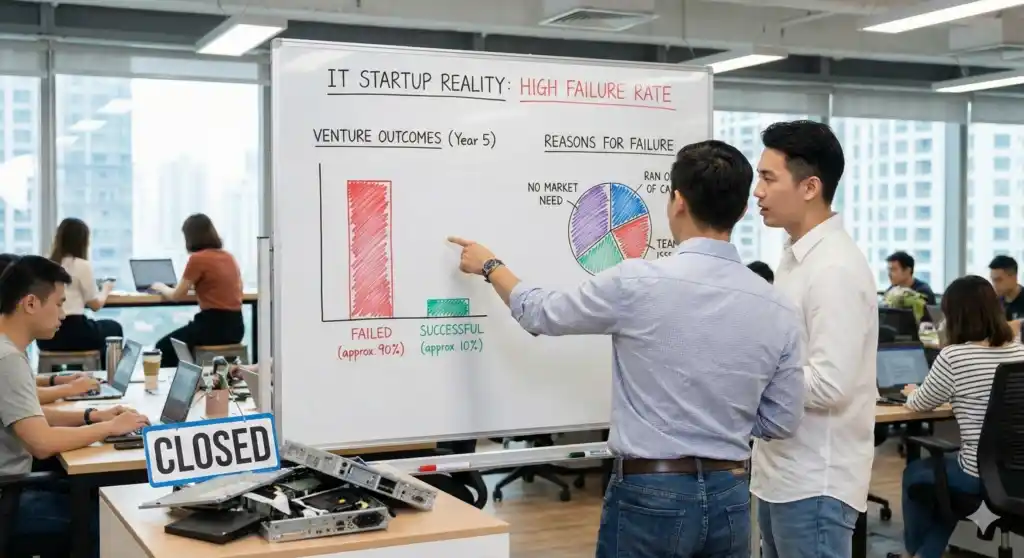
An essential guide for IT startup founders navigating product-market fit, funding, and sustainable growth
The startup world is intoxicating. Media coverage celebrates billion-dollar exits and overnight success stories. Social media is filled with founders sharing growth milestones and funding announcements. What you don’t see are the thousands of startups that burn through capital, never find product-market fit, and quietly shut down after exhausting all options.
We’ve worked with IT startups at every stage from pre-revenue founders with brilliant ideas to growth-stage companies struggling to scale profitably. The pattern is remarkably consistent: most IT startups fail not because they lack technical capability or market opportunity, but because they lack strategic execution fundamentals.
Here’s the reality: building great technology is necessary but insufficient for startup success. The IT startups that succeed are the ones that combine technical innovation with strategic business execution product-market fit, sustainable unit economics, effective go-to-market strategies, and capital efficiency. Without these fundamentals, even the most impressive technology becomes a failed experiment.
The Tech Startup Landscape: Opportunities and Illusions
India’s IT startup ecosystem has exploded in the past decade. SaaS companies, fintech platforms, edtech solutions, healthtech innovations, AI applications the opportunities seem endless. Access to cloud infrastructure has dramatically reduced technology barriers to entry. Funding, while cyclical, flows to promising ventures.
These conditions create real opportunities:
- Low Initial Capital Requirements: Unlike manufacturing or retail, IT startups can launch with minimal capital. Cloud infrastructure, open-source tools, and remote teams mean you can build and deploy products without massive upfront investment.
- Global Market Access: IT products and services can reach global markets from day one. A SaaS product built in Bangalore can serve customers in San Francisco, Singapore, or Stockholm without physical presence.
- Scalability Potential: Software scales unlike physical products. Once built, your product can serve 10 customers or 10,000 customers with minimal incremental cost, creating exponential growth potential.
- Venture Capital Interest: India’s IT startup ecosystem attracts significant venture capital. Investors actively seek promising technology ventures, creating funding opportunities for startups with strong fundamentals.
But these same conditions create dangerous illusions:
- Low Barriers to Entry Mean High Competition: If it’s easy for you to start, it’s easy for everyone else too. Market saturation is real, and differentiation is hard.
- Global Markets Are Hard to Penetrate: Access doesn’t equal traction. Breaking into foreign markets requires understanding local needs, navigating regulatory requirements, and competing with established players.
- Scaling Requires More Than Technology: Growing from 10 to 10,000 customers requires sales, marketing, customer success, infrastructure, compliance, and operational capabilities that most technical founders underestimate.
- Venture Capital Has Expectations: Funding comes with growth expectations, governance requirements, and exit timelines that fundamentally change how you operate. Not every startup should or can meet these requirements.
Understanding these realities early separates successful founders from those who learn painful lessons after burning through capital.
The Four Critical Challenges That Kill Tech Startups
1. Product-Market Fit: Building Something Nobody Wants
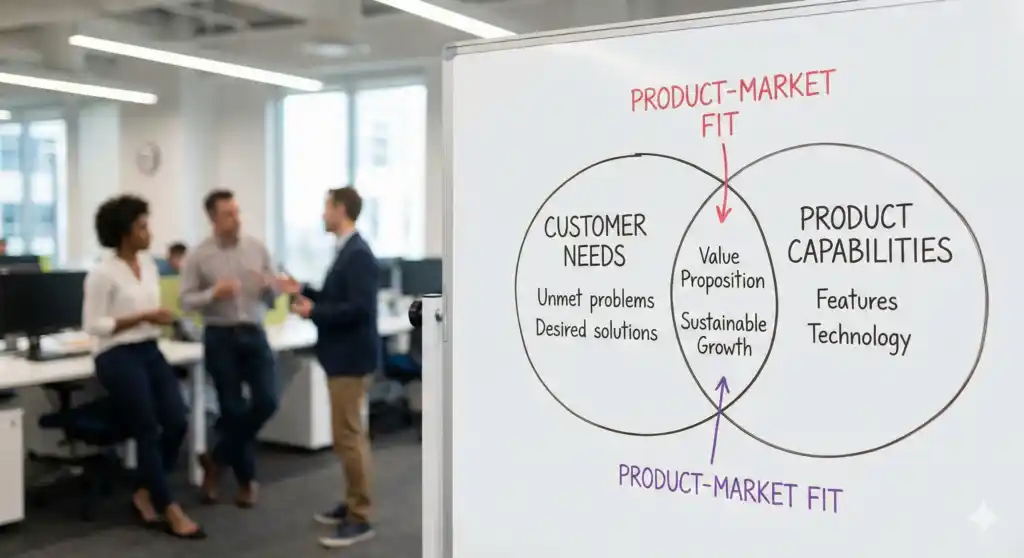
This is the startup graveyard’s largest section. Founders build products they’re passionate about, products they believe the market needs, or products that solve problems they’ve personally experienced. Then they launch and discover that the market doesn’t care.
Product-market fit isn’t about having a good product it’s about having a product that solves a problem customers care enough about to pay for. The gap between these two is enormous.
IT founders, especially technical ones, often fall into the “build first, validate later” trap. They spend months or years building features, perfecting technology, and optimising performance, only to discover their target customers don’t perceive the problem as urgent or don’t view the solution as valuable enough to switch from existing alternatives.
The result? A technically impressive product with no meaningful traction, no revenue, and rapidly depleting runway.
2. Unsustainable Unit Economics and Burn Rate
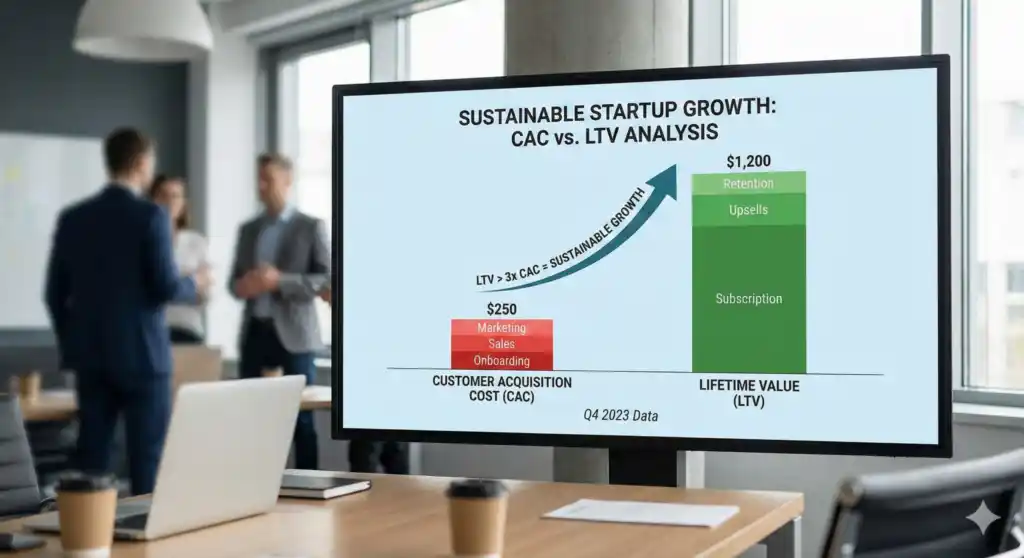
Many IT startups grow top-line metrics user acquisition, monthly active users, transaction volume while ignoring the fundamental question: is each customer profitable?
If your Customer Acquisition Cost (CAC) is ₹50,000 and your Customer Lifetime Value (LTV) is ₹40,000, you don’t have a business you have a cash-burning machine. Yet countless startups operate with negative unit economics, hoping that “scale will fix it” or that they’ll “figure out monetisation later.”
Scale doesn’t fix broken economics. It amplifies them. A company losing ₹10 per transaction doesn’t become profitable at 1 million transactions it loses ₹10 million.
Additionally, many IT startups operate with burn rates that give them 6–12 months of runway, creating constant fundraising pressure. When fundraising cycles extend or market conditions tighten, these startups face existential crises not because their product failed but because they ran out of cash.
3. Go-to-Market Failure: Great Product, No Customers
You’ve built a solid product, validated some initial demand, and secured funding. Now you need to scale customer acquisition. This is where most IT startups hit a wall.
Common go-to-market failures include:
- Undefined Ideal Customer Profile (ICP): Trying to sell to everyone means selling effectively to no one. Without a clear ICP, your marketing is generic and your sales efforts scattered.
- Channel Mismatch: Your customers don’t discover solutions through the channels you’re using. You’re investing heavily in content marketing when your buyers prefer direct sales, or running LinkedIn ads when your audience is on niche industry forums.
- Poor Sales Enablement: Your sales team lacks the tools, training, and collateral needed to close deals effectively. They’re improvising pitches instead of executing a repeatable playbook.
- Pricing Confusion: Your pricing model confuses customers, undervalues your product, or creates friction in the buying process.
Without effective go-to-market execution, your product stagnates regardless of its technical merit.
4. Founder Skill Gaps: Technical Excellence, Business Deficiency
Tech startups are typically founded by technical experts engineers, developers, data scientists who excel at building products but lack experience in business fundamentals: financial management, sales, marketing, fundraising, legal compliance, and strategic planning.
This creates predictable challenges:
- Financial mismanagement: Poor cash flow planning, inadequate financial controls, and failure to track key metrics lead to avoidable crises.
- Hiring mistakes: Building teams based on technical skills while ignoring cultural fit, leadership capabilities, or role requirements.
- Legal and compliance oversights: IP issues, founder agreements, employment contracts, data privacy regulations, and tax compliance get ignored until they create serious problems.
- Strategic decision-making: Founders make reactive decisions based on short-term pressures rather than strategic analysis of long-term implications.
These gaps don’t make founders bad entrepreneurs they’re natural consequences of coming from technical backgrounds. But they’re also the reason why expert guidance makes a measurable difference in success rates.
The Solutions: Strategic Startup Consulting for IT Companies
Successful IT startups don’t just have great technology they have strategic execution across all business functions. Here’s how professional support changes outcomes:
Product-Market Fit Validation and Refinement
Systematically testing and validating product-market fit through customer interviews, pilot programs, MVP testing, and data analysis is essential. The goal is to ensure you’re building something customers will actually pay for before you invest heavily in development and scaling. This includes defining your Ideal Customer Profile, identifying their most urgent pain points, testing your value proposition, and iterating your product based on real market feedback not assumptions.
Business Model Design and Unit Economics Optimisation
Designing sustainable business models with positive unit economics is critical. This includes pricing strategy, revenue model selection (subscription, transaction-based, enterprise licensing), cost structure optimisation, and CAC/LTV analysis. The objective is to ensure that every customer you acquire contributes to profitability, not just top-line growth metrics that mask underlying economic problems.
Go-to-Market Strategy Development and Execution
Comprehensive go-to-market strategies must be customised to your product, market, and resources. This includes ICP definition, positioning and messaging, channel strategy, sales process design, marketing execution plans, and performance tracking. The result is a repeatable, scalable customer acquisition engine that drives sustainable growth rather than sporadic wins.
Financial Planning and Fundraising Support
Developing realistic financial projections, implementing financial controls, and preparing for fundraising are fundamental needs. This includes cap table management, investor pitch development, term sheet negotiation support, and post-funding financial governance. Whether you’re bootstrapping or raising venture capital, proper financial planning ensures you’re making informed decisions about capital deployment and growth strategy.
Operational Infrastructure and Compliance
Establishing operational infrastructure financial systems, legal compliance, HR policies, IP protection, data privacy compliance, and governance structures that support scaling without creating future liabilities is essential. Getting these fundamentals right early prevents costly remediation later and makes your company more attractive to investors and acquirers.
What Makes the Difference: The Integration Factor
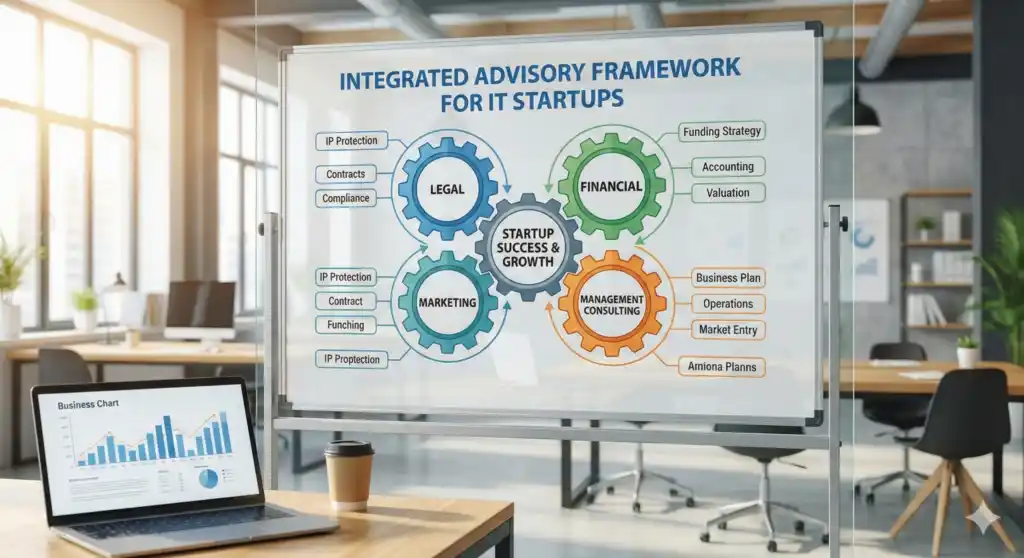
Startup consulting isn’t one-size-fits-all. IT startups have unique needs that generic business consultants often don’t understand. The difference between advice that sits unused and guidance that drives actual results comes down to several critical factors:
- Sector-Specific Expertise: IT startups face challenges that are fundamentally different from retail, manufacturing, or service businesses. Understanding SaaS economics, technology product development, developer-focused sales, API business models, and technology scalability isn’t optional it’s essential. Advisors need to speak your language and understand your market dynamics, not just apply generic business frameworks.
- Holistic, Cross-Functional Support: The challenges you’re facing aren’t isolated to just marketing, or just finance, or just operations. They’re interconnected. Your go-to-market strategy must align with your financial constraints. Your fundraising approach must consider your legal structure. Your hiring plans must account for compliance requirements. Success requires integrated management, financial, legal, and technology consulting not siloed advice in one area.
- Accessibility: Large consulting firms often ignore early-stage and bootstrapped startups, viewing them as too small for their engagement models. Yet these are precisely the companies that need expert guidance most. The difference between success and failure often comes down to whether enterprise-grade expertise is accessible and affordable for resource-constrained startups.
- Execution Partnership: Handing founders a strategy document and disappearing doesn’t work. What works is partnership working together to implement recommendations, troubleshoot challenges, and ensure execution actually happens. Clear, jargon-free communication that helps founders understand trade-offs and implications of every decision.
At Solvencis (part of LawCrust Global Consulting), this integrated, partnership-based approach is fundamental to how startup consulting works for IT companies. The focus is on practical execution rather than theoretical frameworks, with engagement models specifically designed for early-stage and growth-stage companies that need expert support but operate under budget constraints.
Final Thoughts: Strategy Separates Success from Failure
If you’re an IT startup founder, your technical skills got you this far. But scaling from idea to sustainable business requires more than great technology it requires strategic business execution across product, go-to-market, finance, operations, and compliance.
The difference between the 10% of startups that succeed and the 90% that fail isn’t luck or timing. It’s strategic clarity, disciplined execution, and willingness to seek expert guidance in areas outside your core expertise.
Success in the startup world comes down to combining technical innovation with business fundamentals.
FAQ
Is it true that most IT startups fail because of bad technology?
No. Most IT startups fail despite having strong technology. The primary reasons are lack of product-market fit, weak go-to-market execution, unsustainable unit economics, and poor financial planning. Technology is a prerequisite, not a differentiator.
How do founders know if they’ve achieved real product-market fit?
True product-market fit exists when customers are willing to pay, renew, and recommend your product without constant incentives. Signals include consistent usage, organic referrals, low churn, pricing acceptance, and customers expressing that your product is hard to replace not just positive feedback.
Why do many startups grow users but still fail financially?
Because growth without healthy unit economics is dangerous. If customer acquisition costs exceed lifetime value, scaling only accelerates losses. Successful startups prioritise CAC–LTV discipline early rather than assuming profitability will magically appear at scale.
Do all IT startups need venture capital to succeed?
No. Venture capital is a growth accelerator, not a requirement. Many IT startups fail because they raise capital without a clear path to sustainable growth or without understanding investor expectations. Bootstrapping or strategic funding can be better options depending on the business model and market.
What do the top 10% of IT startups do differently from the start?
They validate before building, focus on a sharply defined customer segment, design sustainable business models, execute disciplined go-to-market strategies, and seek expert guidance early in areas beyond technology finance, legal, operations, and strategy. They treat execution as seriously as innovation.
About Solvencis
Solvencis delivers cutting-edge Hybrid Consulting Solutions in Management, Finance, Technology, and Legal Consulting to ambitious IT businesses worldwide. Recognised for our cross-functional expertise and execution-focused approach, we empower IT startups, MSMEs, and growth-stage companies to scale efficiently, compete strategically, and achieve sustainable revenue growth. Our services span Go-to-Market Strategy, Growth Consulting, Mergers & Acquisitions, Private Placement, and Organisational Restructuring positioning us as a strategic partner for IT companies ready to win in competitive markets.
For expert consulting Guidence
- Email: inquiry@solvencis.com